
Do dryer vents cause fires? They can, and the national data shows that the most common contributing factor is also one of the most preventable: lint that was never cleaned out. But dryer fire numbers get passed around online with the source, the year and the scope stripped away, which makes them sound bigger, smaller or newer than they are.
This article sticks to two primary sources, the U.S. Fire Administration (USFA) and the National Fire Protection Association (NFPA), and keeps their figures separate. They measure different things over different years, so they should not be blended into one number. Birmingham Dryer Vent Cleaning is a free quote service: we connect Birmingham-area homeowners with independent local dryer vent cleaning companies for free, no-obligation quotes. The goal here is simply to give you accurate context and practical steps.
What the U.S. Fire Administration found (2008–2010 data)
The USFA's Topical Fire Report Series report "Clothes Dryer Fires in Residential Buildings (2008–2010)," published in August 2012, looked at fires reported to U.S. fire departments in residential buildings. Its key findings:
- "An estimated 2,900 clothes dryer fires in residential buildings are reported to U.S. fire departments each year and cause an estimated 5 deaths, 100 injuries, and $35 million in property loss."
- "Failure to clean (34 percent) was the leading factor contributing to the ignition of clothes dryer fires in residential buildings."
- "Dust, fiber, and lint (28 percent) and clothing not on a person (27 percent) were, by far, the leading items first ignited."
- Dryer fires were more common in fall and winter, "peaking in January at 11 percent."
Keep in mind that this is 2008–2010 data. It is still a useful, carefully scoped picture, but it is not a current annual count.
What the NFPA found (2014–2018 data)
The NFPA's "Home Dryer Fires" report by Marty Ahrens, published in June 2020, covers a later period and a broader scope:
- "In 2014-2018, local fire departments responded to an estimated average of 13,820 home structure fires per year in which dryers were involved in the ignition. These fires caused an average of seven civilian deaths, 344 civilian injuries, and $233 million in direct property damage annually."
- "One-third (32 percent) of dryer fires were caused by a failure to clean. This appears to be mainly lint build-up, as 27 percent of dryer fires started when dust, fiber or lint ignited."
We did not find a newer NFPA dryer fire report, so 2014–2018 is the most recent NFPA data cited here.
The two sources side by side
| USFA | NFPA | |
|---|---|---|
| Data years | 2008–2010 | 2014–2018 |
| What it counts | Clothes dryer fires in residential buildings | Home structure fires in which dryers were involved in the ignition |
| Fires per year | 2,900 | 13,820 |
| Deaths per year | 5 | 7 |
| Injuries per year | 100 | 344 |
| Property loss per year | $35 million | $233 million |
| Failure to clean | 34% (leading factor) | 32% |
| Dust, fiber or lint first ignited | 28% | 27% |
Why the numbers are so different
At first glance, 2,900 and 13,820 look like they can't both be right. They can, because they answer different questions. The two reports use different definitions and cover different years, and the NFPA count includes fires that fall outside the USFA's residential-building scope. That is why you should never add them together, average them or swap one year's figure into the other source.
What is striking is how closely the two agree on cause. Roughly a third of dryer fires in both reports trace back to a failure to clean (34 percent in the USFA data, 32 percent in the NFPA data), and lint, dust or fiber is the first thing to ignite in more than a quarter of them (28 percent and 27 percent). Different scopes, different years, same basic lesson.
Does a dryer vent get hot enough to start a fire?
The vent itself isn't the heat source; the dryer is. The problem is what happens when the exhaust can't get out. The U.S. Consumer Product Safety Commission (CPSC) explains: "Lint can block the flow of air, cause excessive heat build-up, and result in a fire in some dryers."
In other words, a clear vent lets hot, moist air leave the house. A clogged vent traps that heat, and lint is a ready fuel. That is why the CPSC recommends cleaning the lint screen with every load, cleaning "the dryer vent and exhaust duct periodically," and replacing plastic or foil accordion-type duct with rigid or corrugated semi-rigid metal duct.
Closer to home
National numbers can feel abstract, so it helps to know these fires happen locally too. In August 2017, ABC 33/40 reported on two recent fires in Hoover. In one, a fire broke out at a Hoover home caused by a dryer, and a smoke detector alerted the family. In the other, according to a Hoover fire spokesperson, a squirrel crawled through an outside vent and died, igniting a fire. The same report passed along the spokesperson's advice to clean the lint filter before every use.
The second story is a reminder that lint isn't the only blockage. Birds and animals that nest in vents add dry material and block airflow. If you see nesting material, see our page on bird nest and pest removal from dryer vents.
Practical steps that address the leading causes
Because failure to clean is the top factor in both reports, most prevention comes down to simple, routine habits:
- Clean the lint screen every load. The CPSC recommends doing it before or after each load.
- Have the vent cleaned regularly. NFPA and GE say at least once a year; some manufacturers say every one to two years. See how often to clean your dryer vent.
- Watch for warning signs. Long drying times, damp clothes after a normal cycle, a hot laundry room or weak airflow outside. Our list of signs your dryer vent is clogged covers them.
- Use metal duct. NFPA says "rigid or flexible metal venting material should be used," and the CPSC recommends replacing plastic or foil accordion-type duct.
- Don't crush the duct. Leave room behind the dryer so the transition duct isn't flattened against the wall.
- Keep the outside vent clear. Check that the flap opens when the dryer runs and that no lint or nesting material is packed in it.
- Keep smoke alarms working. In the Hoover house fire ABC 33/40 described, a smoke detector alerted the family.
What a professional cleaning involves
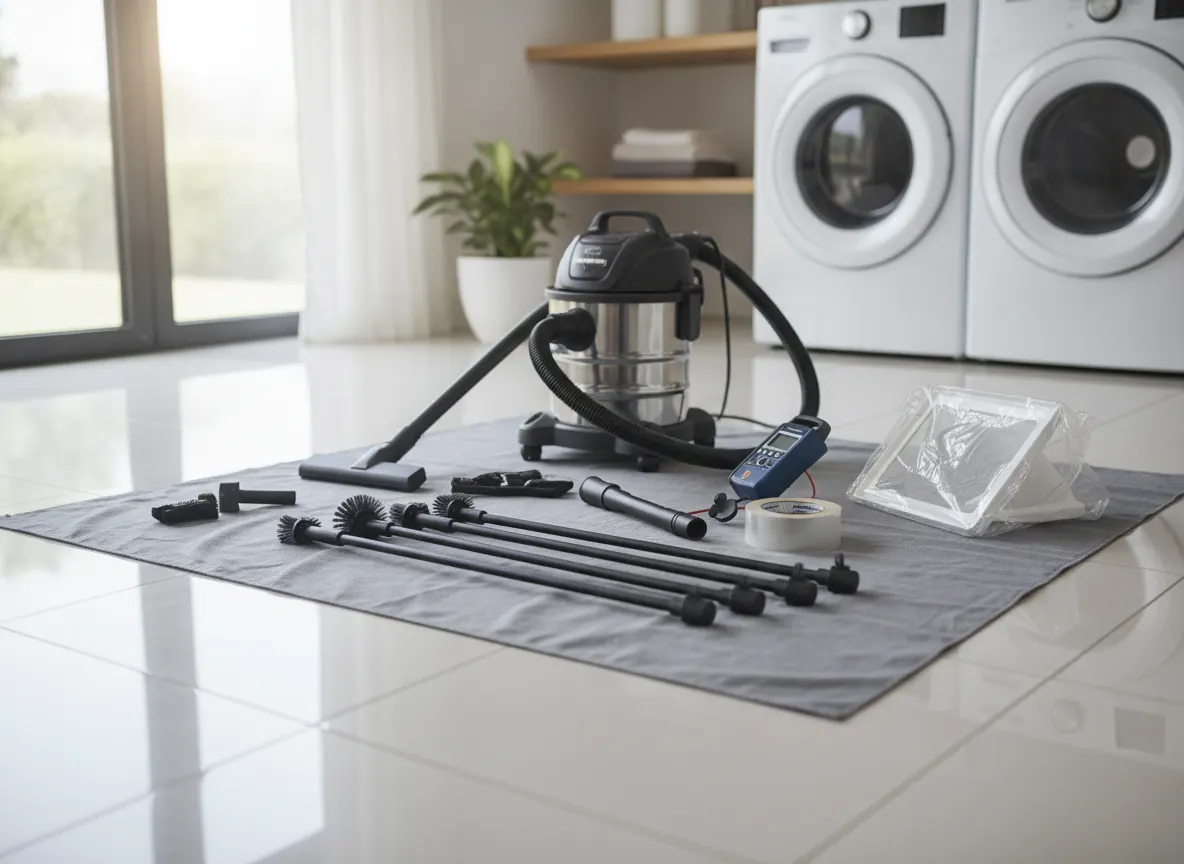
On a typical visit, a technician will usually check airflow at the outside vent, inspect the transition duct behind the dryer, run a rotary brush and vacuum through the full length of the vent, clear the exterior hood or roof cap, and check airflow again. If the duct is crushed, disconnected or made of foil or plastic, they may recommend repair or replacement. See the dryer vent cleaning page for details.
Typical national ranges from HomeAdvisor (2026), Fixr (2025) and Bob Vila (2024) put a standard cleaning at about $104–$188 (HomeAdvisor average about $145; full range $75–$340). These are estimates, not quotes; the real price depends on vent length, stories, roof access and condition. Our cost guide has the full breakdown.
The bottom line
There is no need to panic about dryer fires. They are well documented, and the leading cause in both national reports is something a homeowner can control. A clean lint screen, a clean vent and the right duct go a long way. If it has been a while since your vent was cleaned, request a free quote and we'll connect you with independent local companies across the Birmingham area. Call (727) 300-6656