
Dryer Vent Repair, Rerouting & Replacement in Birmingham, AL
Crushed hoses, foil ducts and long, twisting runs keep clogging no matter how often they're cleaned. Compare free, no-obligation quotes from independent local companies for repair, replacement and rerouting.
Get a Free Quote Call (727) 300-6656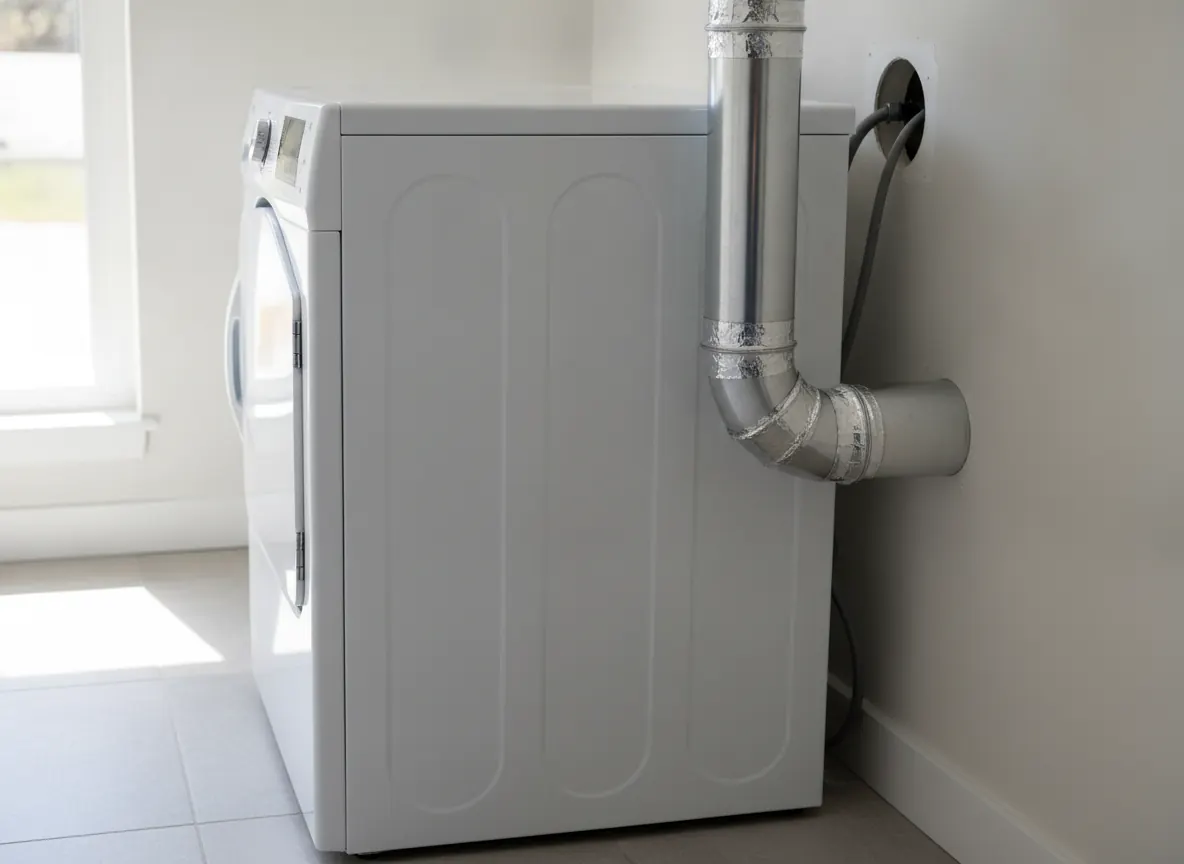
When cleaning isn’t enough
Some vents keep clogging no matter how often they’re cleaned. The cause is usually the duct itself: a transition hose crushed behind the dryer, a white vinyl or thin foil accordion duct, a joint that came apart inside the wall, or a run so long and twisty that lint never makes it outside. In those cases the fix is repair, replacement or a new route.
We connect Birmingham-area homeowners with independent local dryer vent companies for free, no-obligation quotes on vent repair, duct replacement and rerouting. Here’s what to know before you compare quotes.
Crushed, foil and vinyl ducts
The CPSC recommends that homeowners “replace plastic or foil, accordion-type ducting material with rigid or corrugated semi-rigid metal duct.” Its reasoning: “The flexible plastic or foil type duct can more easily trap lint and is more susceptible to kinks or crushing, which can greatly reduce the airflow.” NFPA’s tip sheet says the same in short form: rigid or flexible metal venting material should be used.
Common repair jobs include:
- Replacing a crushed or kinked transition duct behind the dryer
- Swapping vinyl or foil accordion duct for metal
- Reconnecting and sealing joints that have pulled apart in a wall, crawl space or attic
- Replacing duct sections joined with long screws that snag lint
- Replacing a broken exterior hood (see dryer vent cover replacement)
Our article on foil vs. semi-rigid vs. rigid metal duct compares the options in more detail.
What the building code says
The International Residential Code, which Alabama has adopted with amendments, sets the rules for residential dryer exhaust in section M1502. The key points:
- 4-inch smooth metal duct. The IRC says the exhaust duct shall have a “smooth interior finish and be constructed of metal having a minimum thickness of 0.0157 inches (No. 28 gage). The duct shall be 4 inches nominal in diameter.”
- The 1/8-inch screw rule. Joints must be sealed and mechanically fastened, but “ducts shall not be joined with screws or similar fasteners that protrude more than 1/8 inch into the inside of the duct.” Longer screws catch lint. The insert end of each section should point in the direction of airflow, and the duct should be supported at intervals of no more than 12 feet.
- Transition duct rules. The flexible connector between the dryer and the wall must be a single length listed and labeled to UL 2158A, no longer than 8 feet, and it “shall not be concealed within construction.” In other words, it stays visible behind the dryer, not inside a wall.
- Its own system. The dryer exhaust can’t be tied into a bathroom fan or other exhaust duct.
- A backdraft damper and no screen at the outside termination.
Section numbers shift a little between code editions, and local amendments can apply. For a new vent route through walls or the roof, check with your city’s permit office.
The 35-foot rule and fitting deductions
The IRC says the maximum length of the exhaust duct is 35 feet, measured from the connection to the transition duct to the outlet terminal. The transition duct itself doesn’t count. Every elbow uses up some of that length, according to the code’s fitting table:
| Fitting (4-inch duct) | Counts as |
|---|---|
| 4-inch radius mitered 45° elbow | 2 ft 6 in |
| 4-inch radius mitered 90° elbow | 5 ft |
| 6-inch radius smooth 45° elbow | 1 ft |
| 6-inch radius smooth 90° elbow | 1 ft 9 in |
| 8-inch radius smooth 90° elbow | 1 ft 7 in |
| 10-inch radius smooth 90° elbow | 1 ft 6 in |
Example: a run with three tight mitered 90° elbows uses 15 of the 35 feet, leaving 20 feet of straight duct. Swapping in long-radius smooth elbows gives much of that length back. The code also allows the dryer manufacturer’s instructions to set the length instead, and where the equivalent length goes over 35 feet it must be noted on a permanent label within 6 feet of the duct connection. Read more in the 35-foot rule explained.
Rerouting an overlong vent
When a run is too long, a reroute is often the cleanest fix. A technician will typically look for a shorter path to an exterior wall, fewer elbows, or a move from the roof to a side wall where the layout allows it. In Birmingham, Homewood and Mountain Brook, roughly 70 to 76 percent of homes were built before 1980 (Census ACS 2024 5-year estimates), and vents in older houses were often added later along whatever path was available. Newer two-story homes may run the dryer vent up through the attic; see roof and second-story dryer vents.
Power ventilators vs. booster fans
If a shorter route isn’t possible, some homes use a powered fan to help push air through a long duct. The code is specific here. Domestic dryer exhaust duct power ventilators must conform to UL 705, and the 2021 IRC adds that “domestic booster fans shall not be installed in dryer exhaust systems.” So if a company suggests a fan, ask whether it’s a UL 705 listed dryer exhaust duct power ventilator installed to its manufacturer’s instructions, not a generic inline booster fan.
Typical cost and who to hire
Typical national ranges from HomeAdvisor (2026), Fixr (2025) and Bob Vila (2024) — estimates, not quotes.
| Item | Typical range |
|---|---|
| Minor repair | $75–$150 |
| Reroute or new vent run | $200–$500 (duct replacement $175–$600) |
| New vent installation | avg about $200; typically $140–$600 (rigid avg about $275) |
Your price depends on vent length, stories, roof or attic access and what’s behind the wall. Under Alabama’s Home Builders Licensure Board law, a license applies to residential repair or improvement jobs over $10,000 (over $2,500 for residential roofing). Typical dryer vent jobs cost far less. Ask any company for its city business license, proof of liability insurance and a written quote. This is general information, not legal advice. More in who to hire for dryer vent work in Alabama.
Ready to compare prices? Get a free quote.
Frequently asked questions
Can a dryer vent hose be too long?
Yes. The International Residential Code limits the exhaust duct to 35 feet from the transition duct connection to the outside, minus an allowance for each elbow. A tight 90-degree mitered elbow counts as 5 feet. The flexible transition hose behind the dryer is limited separately to 8 feet and must stay visible. Dryer manufacturer instructions can set a different maximum.
Is foil or vinyl dryer duct safe?
The CPSC recommends replacing plastic or foil accordion-type duct with rigid or semi-rigid metal duct, because flexible plastic and foil can trap lint more easily and are more likely to kink or crush. The IRC calls for smooth-walled 4-inch metal duct for the main run, with a UL 2158A listed transition duct behind the dryer.
Are dryer booster fans allowed?
The 2021 International Residential Code says domestic booster fans shall not be installed in dryer exhaust systems. It does allow dryer exhaust duct power ventilators that conform to UL 705, installed per their manufacturer's instructions, for runs that can't be kept within the length limit. Ask any company exactly which product it is proposing.
Can screws be used to join dryer duct?
Only short ones. The IRC requires duct joints to be sealed and mechanically fastened, but screws or similar fasteners may not stick more than 1/8 inch into the inside of the duct, because longer points catch lint. The insert end of each section should also point in the direction of airflow so lint slides past the joint.
Do I need a permit to reroute a dryer vent?
It depends on your city and the scope of the work. A new vent route through a wall or the roof may be treated as mechanical work. Check with your city's permit office in Birmingham or your suburb before the job starts, and ask the company you hire whether it will handle any permit that's needed.
Clothes taking forever to dry? Get your vent checked.
Free, no-pressure quotes across Birmingham, Hoover, Vestavia Hills, Homewood and nearby.