
If your laundry room is upstairs, or your dryer vent comes out on the roof instead of a wall at ground level, the vent probably works harder than a short first-floor run does. These vents are also harder to see and harder to reach, so problems go unnoticed. Here is why a dryer vent on the roof or a second-floor wall tends to clog, the signs to watch for, what the building code says about routing a vent up through the roof, and what professional roof dryer vent cleaning typically involves.
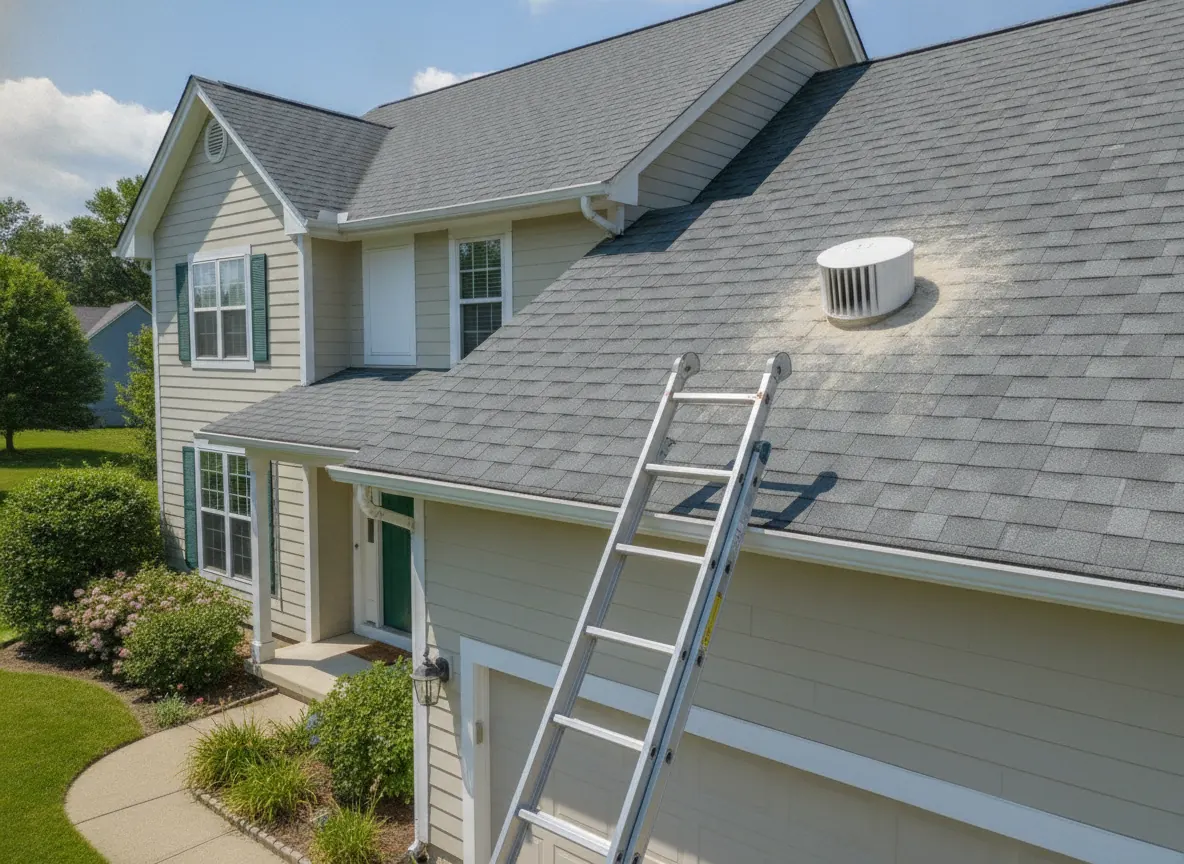
Two-story homes and long vent runs around Birmingham
Many homes across the metro have upstairs laundry rooms or dryers in interior spaces with no easy path to an outside wall. Census data doesn't count how many local homes have two stories, but a regional figure gives a sense of it: about 4 in 10 new single-family homes built in our region have two or more stories, according to an NAHB analysis of Census construction data for Alabama, Kentucky, Mississippi and Tennessee.
Housing age varies widely across the metro, according to Census ACS 2024 5-year data. More than half of homes in Helena and Pelham were built in 2000 or later, and Hoover's median year built is 1994. In Mountain Brook, Bessemer, Birmingham and Homewood, roughly 70–76% of homes were built before 1980. Newer homes often have upstairs laundry by design. In older homes, vent runs have had decades to collect lint, sag or work loose at the joints. Either way, a long or vertical run deserves regular attention. You can find more about your area on our service areas page, including Hoover, Helena and Mountain Brook.
Why roof and second-floor dryer vents clog
- Length and elbows. Upstairs and roof runs are usually longer and have more turns. Every bend slows the air, and slower air drops more lint.
- Vertical rise. When a vent runs straight up to the roof, the dryer has to push air and lint upward. Lint that doesn't make it out can settle at the bottom of the run, or collect near the top in the cap.
- The roof cap. Roof terminations collect lint around the damper. A damper that sticks open lets in rain, leaves and nesting birds. One that sticks closed traps exhaust.
- Out of sight. You walk past a first-floor wall vent every day. Few people ever look at a roof cap, so a dryer vent clogged on the roof can go unnoticed for a long time.
Signs your roof or upstairs vent needs attention
- Clothes still damp at the end of a normal cycle, or needing a second run.
- Visible lint on the shingles or around the roof cap (look from the yard with binoculars, not from a ladder).
- A hot, humid laundry room or a dryer that is hot to the touch.
- A dryer that shows a "check vent" or similar warning.
- Little or no air coming out of the termination while the dryer runs.
CPSC lists the first sign directly: damp clothes or longer drying times "may be a sign that the lint screen or the exhaust duct is blocked." It also advises checking the outside vent while the dryer is running to make sure exhaust air is escaping. That is easy at a ground-level wall vent and much harder on a roof, which is one reason upstairs systems often get professional checks. See more signs of a clogged dryer vent.
Can a dryer vent go up through the roof?
Yes, with conditions. The International Residential Code, which Alabama has adopted with amendments, says exhaust ducts "shall terminate on the outside of the building." A roof termination counts. A vent that dumps into the attic, a soffit cavity or the garage does not. The code's key requirements:
- Termination: if the dryer manufacturer doesn't specify a location, the duct must end at least 3 feet in any direction from openings into the building. The termination must have a backdraft damper, and "screens shall not be installed at the duct termination."
- Material: 4-inch nominal duct of metal with a smooth interior finish, supported at least every 12 feet, with joints sealed and mechanically fastened. Screws can't stick more than 1/8 inch into the duct, because they catch lint.
- Length: a maximum of 35 feet from the transition duct connection to the outlet, reduced for each fitting. For example, a 4-inch radius mitered 90° elbow counts as 5 feet. The manufacturer's instructions can allow a different length. Our 35-foot rule guide walks through the math.
- Help for long runs: the 2021 IRC prohibits domestic booster fans in dryer exhaust systems. Where a run is too long, the code allows a dryer exhaust duct power ventilator listed to UL 705, installed per its manufacturer's instructions.
If you are considering a new vent route through a wall or the roof, check with your city's permit office first. Rerouting can sometimes shorten an upstairs run or move the termination from the roof to a sidewall. Our dryer vent repair and replacement page explains the options.
How roof and second-story dryer vent cleaning typically works
A frequent question is about cleaning a roof dryer vent from inside. Much of the work usually is done from inside. A typical visit looks like this:
Baseline check
The technician pulls the dryer out, inspects the transition duct and often takes an airflow reading.
Clean from the dryer end
Rotary brushes on flexible rods run up the duct while a vacuum collects the lint. On long runs the technician may add rods section by section.
Clear the termination
For roof vents, the technician usually goes on the roof to clear lint from the cap and check that the damper opens and closes. Second-floor wall vents may need a tall ladder.
Inspect and retest
A camera can show crushed sections, disconnected joints or debris. A final airflow reading confirms the improvement.
A roof cap that is cracked, rusted, stuck open or fitted with a screen is usually worth replacing with a code-compliant damper cap. See vent cover replacement.
Safety note: roof work is the riskiest part of this job. Leave the roof and tall ladders to someone with the right equipment, and don't try to push a brush kit up a long run from below. Kits can get stuck or come apart inside the duct.
What roof and second-floor vent cleaning costs
| Item | Typical range |
|---|---|
| First floor / basement vent | $80–$175 |
| Second-floor vent | $110–$200 |
| Roof vent | $150–$300 |
| Bird nest or pest removal | $120–$400 |
| Reroute or new vent run | $200–$500 (duct replacement $175–$600) |
Typical national ranges from HomeAdvisor (2026), Fixr (2025) and Bob Vila (2024) — estimates, not quotes. Roof pitch, height, vent length and the condition of the cap all affect the real price. See the full dryer vent cleaning cost breakdown.
How often should upstairs and roof vents be cleaned?
NFPA and GE say at least once a year, and some manufacturers say every one to two years. Long, roof or second-floor runs and homes with pets clog faster, so stay at the once-a-year end of that range or check more often if drying times creep up. More detail is in how often to clean your dryer vent.
Get a quote for your roof or second-story vent
Birmingham Dryer Vent Cleaning is a free quote service. We connect Birmingham-area homeowners with independent local dryer vent cleaning companies for free, no-obligation quotes. Tell us where your vent ends (roof, second-floor wall or not sure), roughly where the dryer sits, and any signs you have noticed. Learn more on our roof and second-story dryer vents page, or get your free quote now. We usually reply the same day.