
How Dryer Vent Cleaning Works, Step by Step
From the free quote to the final airflow test: what to expect when you book a dryer vent cleaning in the Birmingham area.
Get a Free QuotePart 1: How getting quotes works
We connect Birmingham-area homeowners with independent local dryer vent cleaning companies for free, no-obligation quotes. Here's what happens after you reach out.
Tell us about your dryer vent
Fill out the short quote form with your name, phone, ZIP and the service you need. Mention which floor the dryer is on, where the vent exits (a wall, a second story or the roof) and how long a load takes to dry.
A local company follows up
We pass your request to an independent dryer vent cleaning company that works your part of the Birmingham metro. We usually reply the same day, and the company contacts you to talk through the job.
Get a written quote
The company may price the job from your description or ask to see the vent first. Ask for the price in writing, with what's included: the full run, the outside cap, airflow testing and any repairs.
Compare and decide
There's no obligation and no charge for using this service. Ask for the company's city business license and proof of liability insurance, and book only if the quote suits you.
Part 2: What a typical cleaning involves
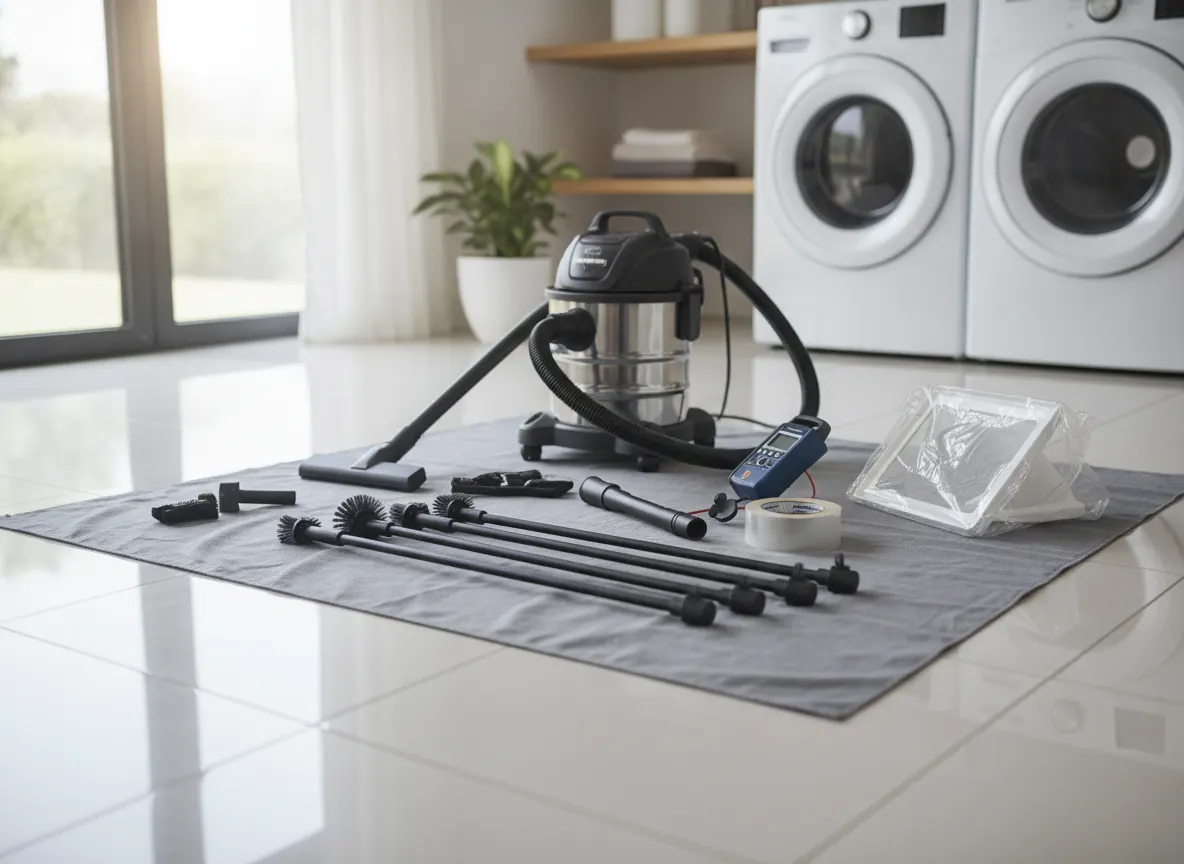
Every company has its own routine, but a thorough dryer vent cleaning usually follows the same basic order. The aim is a clear run from the dryer to the outside, a sound transition duct, a cap that opens freely and an airflow reading that proves it.
Before the visit, clear a path to the laundry area, empty the dryer and make sure the outside vent is reachable. If the vent exits on the roof or a second story, let the company know in advance so the technician brings the right ladder.
Pull out the dryer and disconnect it
The technician typically moves the dryer away from the wall, shuts off power (and gas, on a gas dryer, following the manufacturer's instructions) and disconnects the transition duct from the dryer and the wall.
Take a before airflow reading
Many technicians measure airflow at the outside hood or roof cap before starting, so the result can be compared after cleaning. A camera may be used to look inside the run.
Brush and vacuum the full run
A rotary brush on flexible rods is fed through the duct, often from both the inside and the outside, while a vacuum pulls the loosened lint out. Roof and second-story vents may be worked from the roof end.
Check the transition duct
The connector behind the dryer is checked for crushing, kinks and tears. The International Residential Code, which Alabama has adopted with amendments, calls for a single UL 2158A listed transition duct no longer than 8 feet and not hidden inside walls.
Clear and check the outside cap
Lint, nests and debris are cleared from the exterior hood or roof cap, and the damper flap is checked to make sure it opens freely and closes. The code requires a backdraft damper and no screen at the termination.
Reconnect and test airflow again
The dryer is reconnected and run, and a final airflow reading confirms air is moving out the vent. Any problems found, such as foil duct, loose joints or a run over the code's 35-foot limit, should be explained before extra work is quoted.
What the technician may flag along the way
A cleaning is also a chance to spot problems in the vent itself. Common findings include:
- Foil or vinyl hose. The CPSC recommends replacing plastic or foil accordion-type ducting with rigid or corrugated semi-rigid metal duct, because it traps lint more easily and kinks or crushes.
- A run that's too long. The code limits the exhaust duct to 35 feet, minus an allowance for each elbow. Long runs clog faster.
- Screws poking into the duct. Joints shouldn't use fasteners that protrude more than 1/8 inch inside, since they catch lint.
- A screened or stuck cap. Screens aren't allowed at the termination; a backdraft damper that opens and closes is the code-compliant fix.
- A booster fan. The 2021 IRC prohibits domestic booster fans in dryer exhaust systems. Only UL 705 listed dryer exhaust duct power ventilators are allowed.
- Nests or pests. If birds are nesting, the species should be identified first. Active nests of protected native birds can't be destroyed under USFWS rules, while house sparrows and starlings aren't protected under the Migratory Bird Treaty Act.
If the fix involves a new vent route through a wall or the roof, check with your city's permit office. See vent repair and replacement and the cost guide for typical prices.
Questions to ask before you book
- Does the price cover the full run to the outside, including a roof or second-story outlet?
- Are before-and-after airflow readings included?
- What happens if a nest, crushed duct or broken cap turns up, and how is that priced?
- Can I see your city business license and proof of liability insurance?
- If you also clean HVAC air ducts, are you HACR certified? (Alabama's HVAC board requires certification for air duct cleaning.)
- Will I get the quote in writing before work starts?
This is general information, not legal advice. More answers are on the FAQ page, or start with a standard dryer vent cleaning.
Clothes taking forever to dry? Get your vent checked.
Free, no-pressure quotes across Birmingham, Hoover, Vestavia Hills, Homewood and nearby.